What Are Contract Templates?
Contract templates are pre-written agreement formats you can reuse by filling in your own details.
They usually include:
- Standard clauses
- Basic structure
- Placeholder fields
They are designed to save time.
And they do.
Until they don’t.
Why Do People Copy-Paste Contract Templates?
People are quick to copy-paste contract templates because it feels efficient and safe.
Copy-paste templates:
- Remove the blank page problem
- Provide ready-made structure
- Look professional
Most freelancers and small businesses rely on them for speed.
However, let’s not forget that speed without review creates hidden problems.
What’s the Real Risk of Copy-Paste Templates?
The ultimate risk is that they carry old assumptions into new situations.
When you reuse a template:
- You inherit wording written for someone else
- You may keep clauses that don’t apply
- You may miss sections that do apply
The template wasn’t built for your exact scenario.
It was built for a general one.
That gap is where problems start.
How Do Legal Document Templates Become Risky?
Legal templates become a risky option when they aren’t customized properly.
Legal document templates often contain:
- Broad language
- Flexible clauses
- Generic timelines
If you copy and paste without reviewing carefully, vague terms remain.
For example:
- “Reasonable timeframe”
- “As agreed by both parties”
- “Standard services”
These phrases feel harmless.
They become confusing when expectations clash.
At SnapLegal, we often see users realize too late that their template never clearly defined scope.
Can a Contract Generator Fix Copy-Paste Problems?
A contract generator cannot fix copy-paste issues automatically.
A contract generator improves structure and formatting. That’s helpful.
But if you:
- Enter vague inputs
- Skip clarifying questions
- Accept default wording without review
The generated contract may still carry unclear terms.
Automation improves efficiency.
It does not replace clarity.
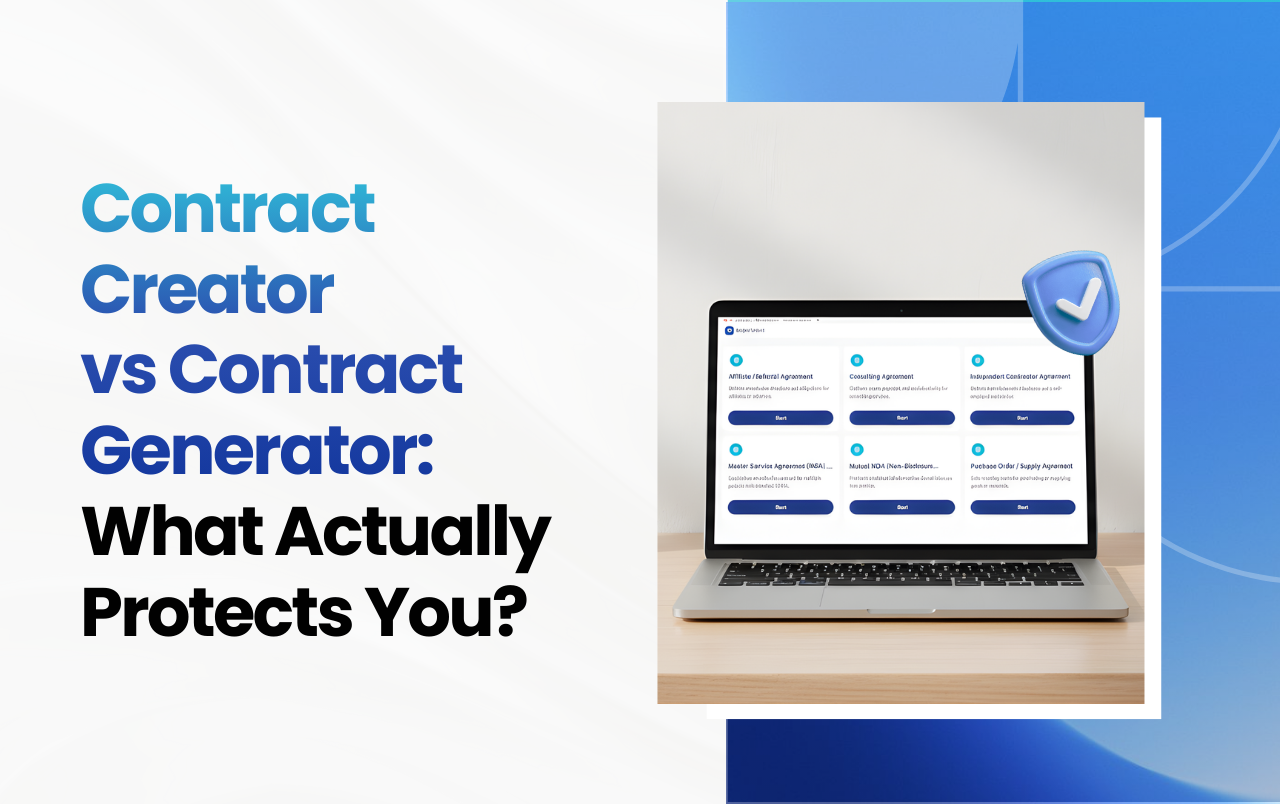
Related: Contract Creator vs Contract Generator: What Actually Protects You?
Why Do Legal Contracts Online Fail After Copy-Paste?
We see a number of contracts failing online because copied documents aren’t reviewed with fresh eyes.
Legal contracts online are often downloaded and reused quickly.
The issue is not access. It’s repetition.
Each time you copy and reuse:
- Old mistakes stay
- Outdated clauses remain
- Irrelevant sections survive
Over time, small issues compound.
What started as a small shortcut becomes structural confusion.
What Happens When You Use Online Legal Documents Blindly?
Small errors scale.
When relying on online legal documents without adjustment:
- Scope may not reflect the current project
- Payment terms may not match new pricing
- Deadlines may be inconsistent
- Responsibilities may be unclear
You don’t notice immediately.
You notice when something goes wrong.
That’s when copy-paste backfires.
How Do Contract Templates Create False Confidence?
You can expect contract templates to backfire because of how they look official.
Templates often:
- Use formal formatting
- Include long clauses
- Sound comprehensive
This creates the illusion of protection.
However, length is not clarity.
Professional tone is not precision.
The real strength of a document comes from specificity.
What Are the Warning Signs of a Risky Template?
Look for language you didn’t fully read or understand.
Red flags include:
- Sections you left unchanged without review
- Clauses that feel overly broad
- Generic service descriptions
- Conflicting dates or timelines
- Payment terms that lack detail
If you skimmed during editing, the other party may read closely later.
How Can a Contract Drafting Tool Help?
By guiding you through decisions instead of encouraging copy-paste.
A good contract drafting tool:
- Explains what each section does
- Encourages specific inputs
- Builds the document step by step
- Reduces reliance on blind copying
Instead of inheriting someone else’s assumptions, you create a document aligned with your situation.
Guidance changes the process.
Related: How a Simple Contract Drafting Tool Can Save Hours and Reduce Errors
How Does SnapLegal Reduce Template Risk?
By focusing on understanding during creation.
SnapLegal is a guided, self-serve document creation platform. Instead of offering static templates to copy and paste, it walks you through the structure in plain English.
You see:
- Why a section exists
- What it affects
- How your answers shape the agreement
This approach helps prevent vague wording and skipped details.
No legal jargon.
No forced sign-up.
You can start instantly and explore before committing.
Why Clarity Beats Copying Every Time
It’s not news now that copying spreads old mistakes.
Clear documents:
- Reflect current expectations
- Match real workflows
- Reduce misunderstandings
Public guidance consistently emphasizes clarity in agreements. Copying text without understanding weakens that clarity.
Should You Stop Using Contract Templates?
No. You should stop using them blindly.
Templates are valuable for:
- Structure
- Consistency
- Efficiency
They become risky when:
- They are reused without review
- Assumptions go unchecked
- Context changes but wording doesn’t
Used thoughtfully, templates save time.
Used casually, they create friction.
Quick Checklist Before Reusing a Template
Before copying a template again, ask:
- Does the scope reflect this exact project?
- Are timelines precise?
- Are responsibilities clearly assigned?
- Are payment terms updated?
- Did I review every clause carefully?
If not, pause and adjust.
Key Takeaways
- Contract templates save time but carry hidden assumptions
- Copy-paste spreads outdated wording
- Generators improve format, not clarity
- Specific language prevents misunderstandings
- Guided creation reduces silent risk
Final Summary: Templates Help. Copying Blindly Hurts.
Contract templates are tools.
Copy-paste is a shortcut.
Shortcuts work until they don’t.
SnapLegal helps you create professional legal documents in minutes through guided, self-serve creation designed for freelancers, contractors, and individuals.
No legal jargon.
No appointments.
No sign-up required.
See the value first. Commit later.
Start with SnapLegal today.
Frequently Asked Questions
Are contract templates safe to use?
Yes, when customized carefully and reviewed fully.
Why does copy-paste cause problems?
Because it carries over old assumptions and vague language.
Can a contract generator prevent template errors?
It helps with structure but still requires thoughtful input.
Do online legal documents need customization?
Yes. Every agreement should reflect its specific situation.
Do I need to sign up to try SnapLegal?
No. You can start creating documents instantly.