What Are Online Legal Documents?
Online legal documents are agreements created, downloaded, or generated through digital tools instead of being written manually.
These documents often come from:
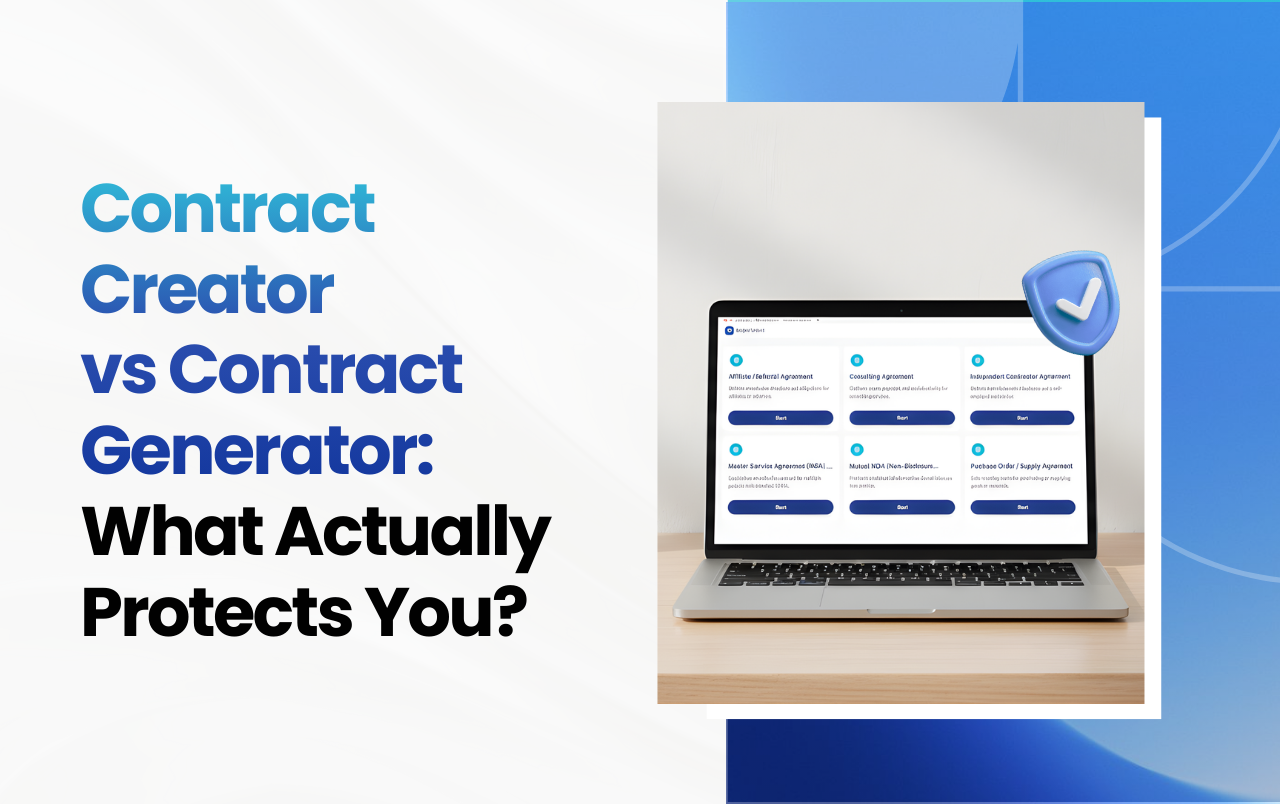
- Legal contracts online platforms
- Contract templates
- Contract creators
- AI-powered drafting tools
They allow people to create agreements quickly without complicated processes.
However, convenience can sometimes hide important risks.
Why Are Online Legal Documents So Popular?
Online legal documents are so popular because they make document creation faster and easier.
People use online documents because they:
- Save time
- Provide ready-made structures
- Reduce manual drafting effort
Freelancers, contractors, and small businesses often rely on these tools for everyday agreements.
However, speed can sometimes lead to overlooked details.
What Are the Hidden Dangers of Online Legal Documents?
The biggest danger is unclear or incomplete information.
Many online legal documents rely on templates designed for general situations. If users don’t adjust them carefully, the final agreement may contain:
- Vague responsibilities
- Undefined timelines
- Missing deliverable details
- Broad or unclear scope
These issues may not be obvious at first.
They often appear later when expectations differ.
At SnapLegal, we often see users realize that their document looked complete but did not clearly describe what they intended.
Why Do Legal Contracts Online Sometimes Fail?
Legal contracts online sometimes are not up to the mark because they are often created too quickly.
Legal contracts online can fail when:
- Users rush through the process
- Clauses are left unchanged without review
- Important details are skipped
The document might appear polished, but unclear wording can create confusion when real situations arise.
Contracts work best when every section reflects the actual agreement.
Are Contract Templates Always Reliable?
No, they require careful customization.
Contract templates provide a helpful framework. They ensure documents include common sections such as:
- Scope of work
- Payment terms
- Responsibilities
However, templates often use broad language so they can apply to many scenarios.
If those sections remain unchanged, the final agreement may not match the specific project.
Templates help with structure, but clarity still depends on the user.
Can a Contract Creator Remove These Risks?
It can help, but it cannot replace thoughtful input.
A contract creator simplifies the drafting process by guiding users through sections and generating structured documents.
This reduces repetitive work.
However, the accuracy of the final document still depends on the details provided.
If the information entered is incomplete or vague, the generated contract may still contain unclear expectations.
Do AI Legal Assistants Solve Template Problems?
They improve speed but still rely on user input.
An AI legal assistant can:
- Suggest clauses
- Draft sections quickly
- Provide structured wording
Nonetheless, AI tools work from patterns and common examples.
If your description of the agreement lacks detail, AI may generate general language that does not fully reflect the real arrangement.
AI supports drafting. It does not replace careful review.
Why Digital Contract Platforms Don’t Automatically Prevent Errors
They manage documents rather than rewrite them.
A digital contract platform typically helps with:
- Document storage
- Version tracking
- Workflow management
These features improve organization.
However, the platform does not automatically correct unclear clauses or missing information within the document itself.
Technology organizes agreements, but clarity still depends on the drafting process.
What Are the Warning Signs of Risky Online Documents?
Look for vague or incomplete sections.
Common warning signs include:
- Broad service descriptions
- Flexible timelines
- Unclear payment conditions
- Responsibilities that are not clearly assigned
- Sections that feel difficult to interpret
If a document leaves room for multiple interpretations, confusion may arise later.
How Can You Reduce the Risks in Online Legal Documents?
Focus on clarity and specificity.
Follow this simple checklist:
1. Define the scope clearly
Explain exactly what work or responsibilities are included.
2. Use precise timelines
Avoid vague deadlines such as “reasonable time.”
3. Clarify payment terms
Specify amounts, schedules, and methods.
4. Review every clause
Ensure you understand each section before finalizing.
5. Avoid generic wording
Replace flexible phrases with specific details.
Clear language helps prevent misunderstandings.
How Does SnapLegal Help Prevent These Hidden Problems?
By guiding users through the document creation process.
SnapLegal is a guided, self-serve document creation platform designed to simplify legal paperwork for freelancers, contractors, and individuals.
Instead of static templates, SnapLegal:
- Explains sections in plain English
- Shows how answers shape the document
- Encourages clear, detailed inputs
This approach helps reduce vague language and overlooked details.
Users can create professional legal documents in minutes while understanding what they are building.
No legal jargon.
No appointments.
No sign-up required to start.
Why Clear Agreements Matter
Clear agreements matter extremely because clarity prevents misunderstandings.
Clear agreements help everyone involved understand expectations and responsibilities.
Public guidance also emphasizes the importance of transparent agreements. When documents are easy to understand, they are easier to rely on.
Should You Avoid Online Legal Documents?
No, but you should use them carefully.
Online legal documents offer many advantages:
- Fast creation
- Accessible tools
- Consistent formatting
They become risky only when users rely on them without reviewing details carefully.
Used thoughtfully, they save time and improve efficiency.
Key Takeaways
- Online legal documents provide speed and convenience
- Templates require customization to match specific situations
- AI tools assist drafting but rely on clear input
- Digital platforms organize contracts but do not fix unclear wording
- Specific language helps prevent misunderstandings
Final Summary: Hidden Risks Come From Unclear Details
Online legal documents are powerful tools.
But when templates are used without careful attention, small gaps can lead to bigger problems later.
SnapLegal helps you create professional legal documents in minutes through guided, self-serve document creation built for freelancers, contractors, and individuals.
No legal jargon.
No appointments.
No sign-up required.
See the value first. Commit later.
Start with SnapLegal today.
Frequently Asked Questions
Are online legal documents reliable?
Yes, when they are carefully reviewed and customized.
Why do legal contracts online sometimes fail?
Because vague wording or missing details create confusion later.
Do contract templates work for all situations?
No. Templates should be adjusted for each agreement.
Can AI legal assistants eliminate document errors?
They can help with drafting but still require careful review.
Do I need to sign up to try SnapLegal?
No. You can start creating documents instantly.