
What Are the Problems With Traditional Legal Agreements?
The biggest problems with traditional legal agreements are complexity, vague wording, and hidden assumptions that many business owners never fully notice.
Traditional agreements often:
- Use dense language
- Contain long, difficult clauses
- Rely on outdated structures
They may look professional.
However, they can still create confusion and risk.
Why Do Traditional Legal Agreements Feel So Difficult to Understand?
Many are written for formality instead of clarity.
Old-school agreements often:
- Use technical wording
- Include unnecessary complexity
- Bury important terms inside long paragraphs
This creates a situation where people sign documents without fully understanding them.
At SnapLegal, we often see business owners assume complicated language means stronger protection. In reality, complexity often hides confusion.
What Legal Agreement Mistakes Do Businesses Commonly Make?
They rely too heavily on old templates and assumptions.
Common legal agreement mistakes businesses make include:
- Reusing outdated contracts
- Copying clauses without review
- Skimming over unclear sections
- Assuming “standard wording” is safe
These shortcuts save time initially but create long-term risk.
Why Are Outdated Contract Templates Risky?
Outdated contracts are risky because business needs change while old documents stay the same.
The outdated contract templates risk comes from:
- Old language remaining unchanged
- Clauses no longer matching current workflows
- Missing details relevant to modern business operations
Templates written years ago may:
- Ignore digital processes
- Use vague timelines
- Include unnecessary sections
What worked before may not work now.
Why Do Lawyer-Drafted Contracts Sometimes Fail?
Complexity does not always create clarity.
People often ask why lawyer-drafted contracts fail in real business situations.
The issue is usually not effort.
It’s usability.
Some contracts:
- Prioritize technical wording over readability
- Contain overly broad clauses
- Become too difficult for everyday business use
If the people signing the agreement don’t understand it clearly, misunderstandings still happen.
A complicated document can still fail operationally.
What Hidden Clauses in Legal Documents Cause Problems?
Clauses buried inside dense wording.
Common hidden clauses in legal documents include:
- Automatic renewal terms
- Termination conditions
- Payment adjustment language
- Responsibility limitations
These sections are often:
- Difficult to spot
- Hard to interpret quickly
- Missed during review
The danger is not always what the clause says.
It’s that nobody noticed it properly.
Why Do Business Owners Miss These Traps?
Contracts are often reviewed under pressure.
Most business owners:
- Are busy
- Want to move quickly
- Focus on closing deals
This leads to:
- Skimming documents
- Assuming wording is standard
- Ignoring unclear sections
The contract gets signed before the risks are fully understood.
Related: How a Simple Contract Drafting Tool Can Save Hours and Reduce Errors
How Do Traditional Agreements Slow Businesses Down?
They create confusion and repeated clarification.
Complex agreements lead to:
- More follow-up questions
- Longer review cycles
- Repeated interpretation issues
Instead of simplifying expectations, the document creates friction.
That slows business operations.
What Are the Warning Signs of a Risky Traditional Agreement?
Look for complexity without clarity.
Red flags include:
- Long paragraphs with no structure
- Clauses that are hard to explain simply
- Broad undefined terms
- Sections that seem copied from unrelated agreements
If you cannot summarize a clause clearly, it may create problems later.
Why Modern Businesses Need Simpler Agreements
Speed and clarity matter more than complexity.
Modern business relationships move quickly.
Agreements should:
- Be easy to understand
- Clearly define expectations
- Reduce unnecessary confusion
Simple contracts improve communication and reduce delays.
What Makes a Modern Contract Creation Tool Different?
It focuses on guidance and clarity.
A modern contract creation tool helps users:
- Understand what they are creating
- Avoid vague language
- Build agreements step by step
Instead of overwhelming users with dense templates, modern tools simplify the process.
That improves both speed and usability.
How Does SnapLegal Solve These Problems?
By replacing complexity with guided clarity.
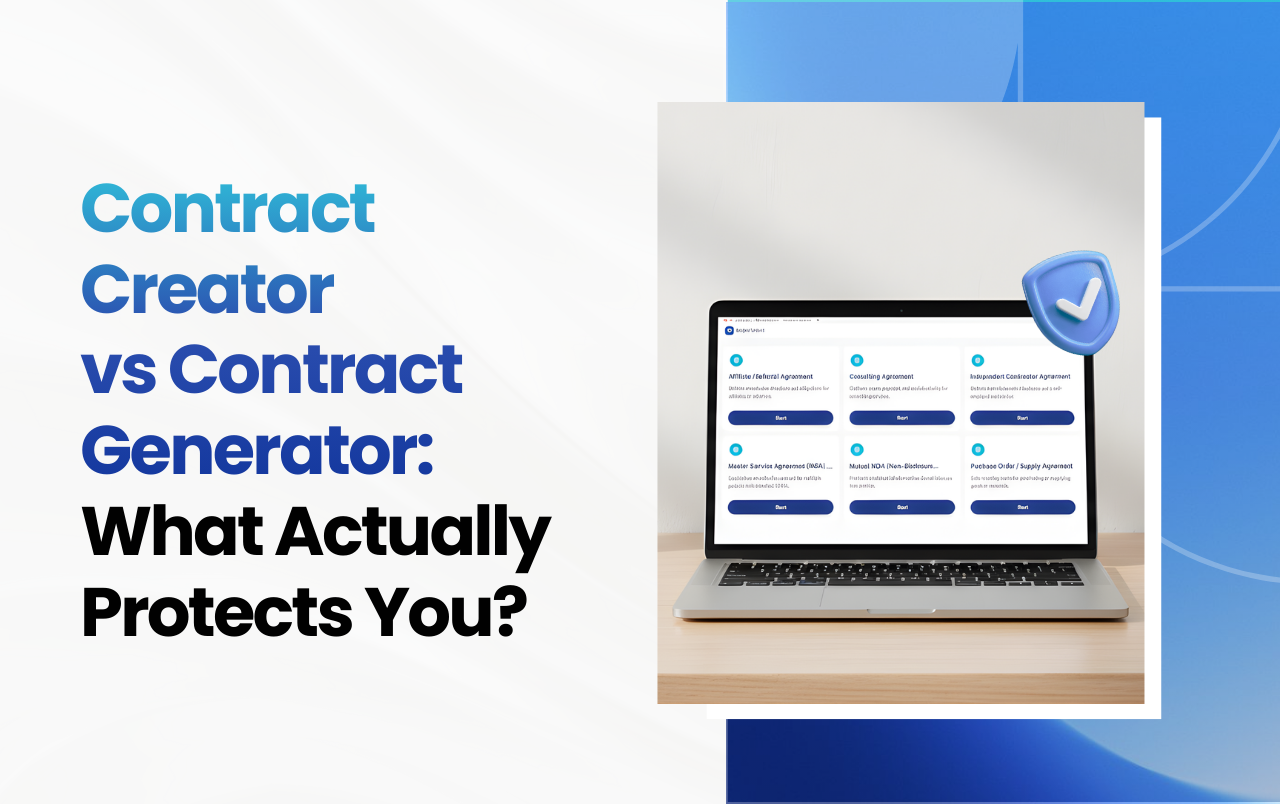
SnapLegal is a guided, self-serve document creation platform built for freelancers, contractors, and small businesses.
Instead of static old-school templates, SnapLegal:
- Explains sections in plain English
- Guides users through each step
- Helps create clear, structured agreements
This reduces hidden confusion before the document is finalized.
You create professional legal documents in minutes without unnecessary complexity.
No legal jargon.
No appointments.
No sign-up required.
Why Clarity Is Better Than Complexity
People can actually use clear agreements.
Complex contracts often:
- Hide important details
- Create misunderstandings
- Slow business communication
Clear contracts:
- Improve confidence
- Reduce repeated clarification
- Support smoother workflows
Should Businesses Stop Using Traditional Agreements Completely?
Not completely. But they should stop relying on outdated complexity.
Traditional agreements still provide structure.
The issue is:
- Unnecessary complexity
- Outdated wording
- Hidden assumptions
Modern businesses need agreements that are practical and understandable.
Key Takeaways
- Traditional legal agreements often hide unnecessary complexity
- Outdated templates create modern business risks
- Hidden clauses are easy to overlook
- Complicated wording does not guarantee clarity
- Modern contract creation tools improve usability and understanding
Final Summary: Complexity Creates Hidden Traps
Old-school legal agreements often look impressive.
But complexity can hide the very problems businesses are trying to avoid.
SnapLegal helps you create professional legal documents in minutes through guided, self-serve document creation designed for modern business clarity.
No legal jargon.
No appointments.
No sign-up required.
See the value first. Commit later.
Start with SnapLegal today.
Related: Why Legal Workflows Often Waste Time and Increase Risk
Frequently Asked Questions
What are the biggest problems with traditional legal agreements?
Complex wording, hidden clauses, and outdated structures.
Why do businesses overlook hidden contract clauses?
Dense formatting and long text make them hard to notice.
Are outdated contract templates risky?
Yes. They may not match current business needs or workflows.
Why do complicated contracts still fail?
Unclear language creates misunderstandings.
Do I need to sign up to try SnapLegal?
No. You can start creating documents instantly.