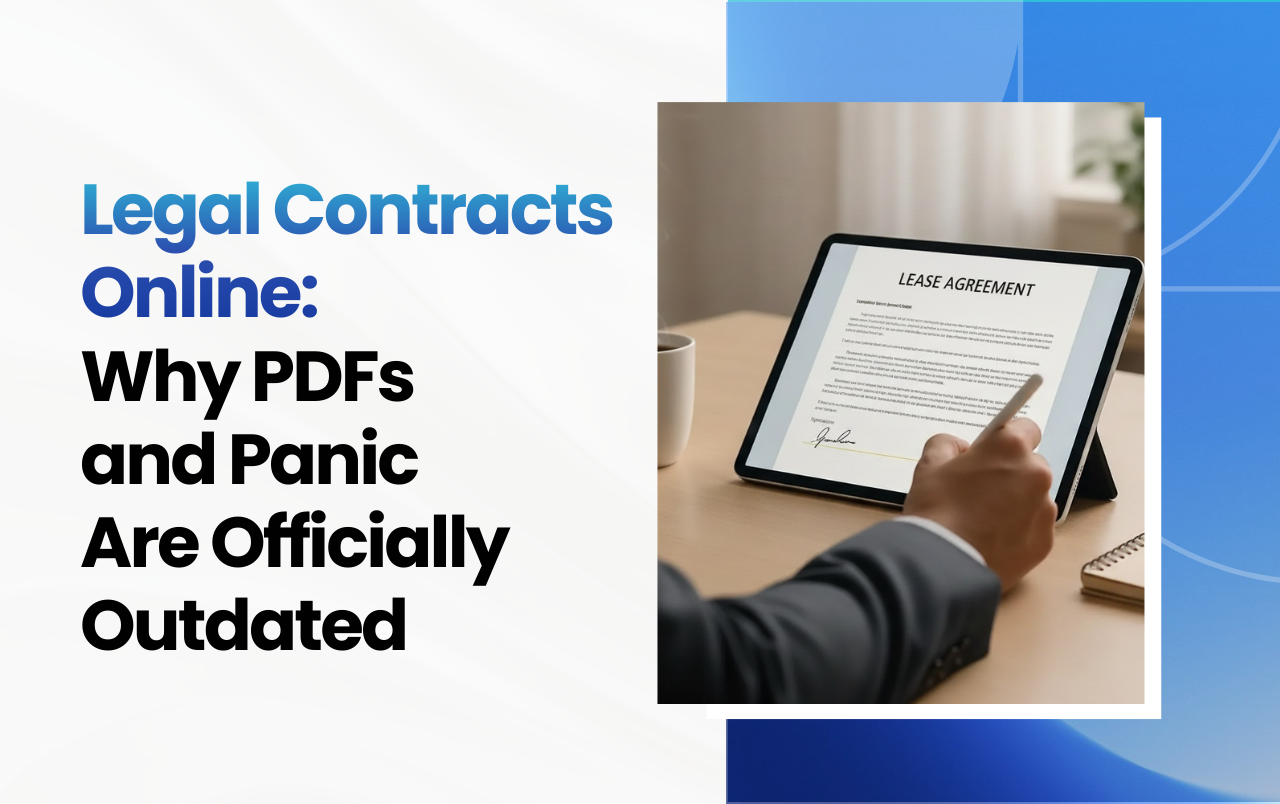
If creating a legal contract still feels like downloading a random PDF, changing the font, praying you didn’t break the formatting and hoping it’s “probably fine,” you’re not alone.
That used to be normal.
It also used to be risky.
Today, legal contracts online have moved far beyond static templates and email attachments. Freelancers, entrepreneurs and small teams are choosing smarter, faster ways to create agreements that actually protect them without adding stress.
Let’s talk about why the old way is outdated and what a modern contract process looks like now.
The Old Way: PDFs, Guesswork and Legal Anxiety
Traditional contract creation usually looks like this:
- Google “contract template”
- Download a free PDF or Word doc
- Edit what you think applies
- Leave clauses you don’t understand
- Email it back and forth
- Wonder if it’s legally binding
- Stress until it’s signed
This process creates three big problems.
First, you don’t know what you don’t know. Most people aren’t lawyers. When a clause sounds confusing, it’s tempting to ignore it instead of understanding it.
Second, templates aren’t personalized. A generic contract doesn’t know if you’re a freelancer in California, a startup hiring contractors, or a consultant working across borders.
Third, signing is clunky. Chasing signatures over email slows everything down and increases the chance something gets missed or altered.
This is exactly why modern businesses are ditching PDFs.
The New Way: Smart, Guided Contract Creation
Modern platforms like SnapLegal approach contracts differently.
Instead of throwing a full document at you and saying “good luck,” they guide you through the process step by step.
Here’s what that looks like in practice.
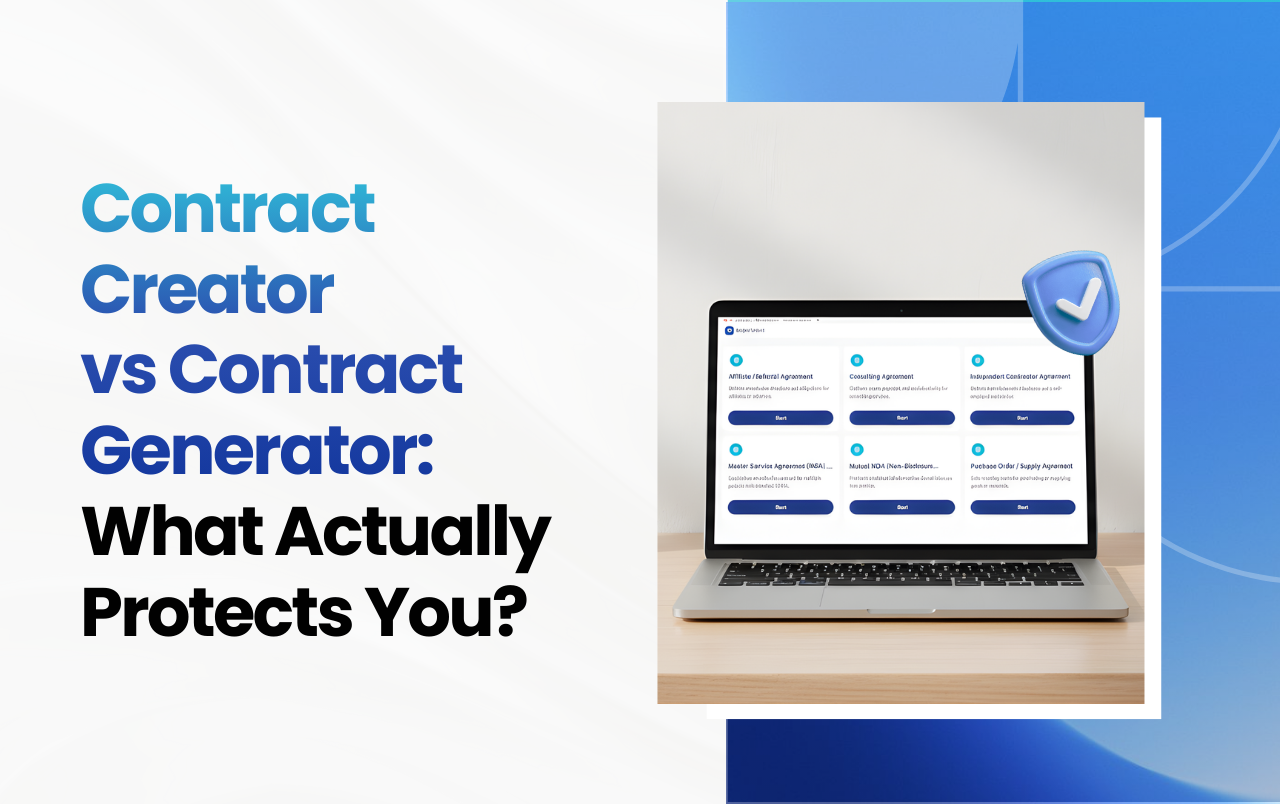
- You choose a contract type.
- You answer simple, plain-English questions.
- The platform builds the legal language for you.
- You preview the contract alongside a human-readable summary.
- You sign digitally and store it securely.
Which means no formatting issues, no legal guesswork and no back-and-forth chaos.
This approach turns contract creation into something that feels manageable, even if you’ve never drafted one before.
Why “Legal Contracts Online” Isn’t Just a Buzzword Anymore
Searching for legal contracts online used to mean downloading a file and hoping it worked.
Now it means:
- AI-assisted drafting
- Built-in legal logic
- Plain-English explanations
- Secure digital signing
- Cloud storage and sharing
The shift happened because businesses needed contracts to move at the same speed as everything else.
Freelancers don’t want to wait days to onboard a client.
Startups can’t afford legal delays.
Small teams need clarity without overhead.
Online contract platforms solve all of that in one place.
The Power of Plain-English Summaries
One of the biggest improvements in modern contract drafting tools is the addition of plain-English summaries.
Legal language exists for a reason, but that doesn’t mean you should be confused by it.
A side-by-side summary lets you understand:
- What you’re agreeing to
- What the other party must do
- How payments work
- What happens if things go wrong
This builds confidence. You’re not just signing something because it “looks official.” You actually understand it.
If you’ve ever signed a contract and immediately felt uneasy, you know how valuable that clarity is.
Digital Signing Isn’t Just Convenient:It’s Safer
Another reason PDFs are fading out is signing.
Printing, scanning and emailing documents isn’t just annoying. It’s also insecure.
A modern digital contract platform uses encrypted legally binding e-signatures. That means:
- Signatures are time-stamped
- Documents can’t be altered after signing
- You always know who signed and when
Everything is tracked. Everything is stored securely.
For freelancers and small businesses, this removes a huge administrative burden.
When Online Contracts Make the Biggest Difference
Online contract tools are especially useful when:
- You work with multiple clients
- You onboard contractors regularly
- You need fast turnaround
- You want fewer misunderstandings
- You don’t have in-house legal support
Whether it’s an independent contractor agreement, consulting agreement, or service contract, speed and clarity matter.
And when contracts are easy to create, people actually use them consistently. That alone reduces risk more than having “perfect” legal language sitting unused.
The Hidden Cost of Doing It the Old Way
People often avoid better contract tools because they think, “What I’m doing works fine.”
But the hidden costs add up:
- Time spent editing documents
- Misunderstandings with clients
- Late payments due to unclear terms
- Disputes caused by vague language
Modern contract tools don’t just save time. They prevent problems before they start.
That’s why more businesses are switching to AI-powered contract creators instead of relying on outdated PDFs.
Ready to Ditch PDFs for Good?
If contracts still feel stressful or time-consuming, that’s a sign your process needs an upgrade.
You shouldn’t have to choose between speed and confidence. With the right platform, you get both.
If you’re curious about creating smarter legal contracts online or need help choosing the right agreement, talk to the SnapLegal team.
Reach out here: https://snaplegal.ai/contactus