Freelancing is great until it isn’t.
You land a client. The project sounds exciting. Everyone is friendly. Then someone asks, “Can we just get started and handle the contract later?”
That is how awkward conversations are born.
Most freelancer problems do not start with bad clients. They start with unclear expectations. And unclear expectations almost always come from weak or missing contracts.
If you are a freelancer and still relying on handshake agreements, copied templates, or emails that say “Sounds good,” this one is for you.
The Real Problem Is Not Trust. It Is Clarity.
Many freelancers avoid contracts because they worry about sounding difficult or untrusting.
Here is the truth. A clear contract is not a lack of trust. It is a lack of confusion.
When expectations are written down, both sides know exactly what is happening. There is less room for misunderstandings, scope creep, or payment delays.
A solid freelance contract answers questions before they become uncomfortable conversations.
What work is included
What is not included
When payment happens
What happens if the project changes
What happens if someone walks away
Without these answers, you end up negotiating in real time while the project is already underway.
Scope Creep Loves Freelancers Without Contracts
Scope creep rarely starts with bad intentions.
It starts with small asks.
Can you just tweak this one thing
Can you add one more revision
Can you help with this extra task
Before you know it, the project looks nothing like what you originally agreed to. And saying no feels awkward because nothing was clearly defined.
A strong freelance agreement sets boundaries upfront. It defines the scope of work so both sides know when something is extra and when it is included.
That way, when a client asks for more, the conversation becomes simple.
Happy to do that. Let me send an update based on our agreement.
That sentence alone can save you hours of unpaid work.
Payment Issues Are Almost Always Contract Issues
Late payments are one of the biggest frustrations freelancers face.
The problem is rarely that clients refuse to pay. The problem is that payment terms were never clearly defined.
A proper freelance contract spells out:
How much you are paid
When payment is due
How invoices are handled
What happens if payment is late
Without this, you are left sending polite reminders and hoping for the best.
With a contract, payment is no longer a favor. It is an obligation.
That shift changes everything.
Why Generic Templates Fall Short
Many freelancers search for a free freelance contract template and call it a day.
Templates can help, but they come with limitations.
They are not personalized.
They do not explain what clauses mean.
They often include legal language that is easy to misunderstand.
This is where AI-powered contract tools make a real difference.
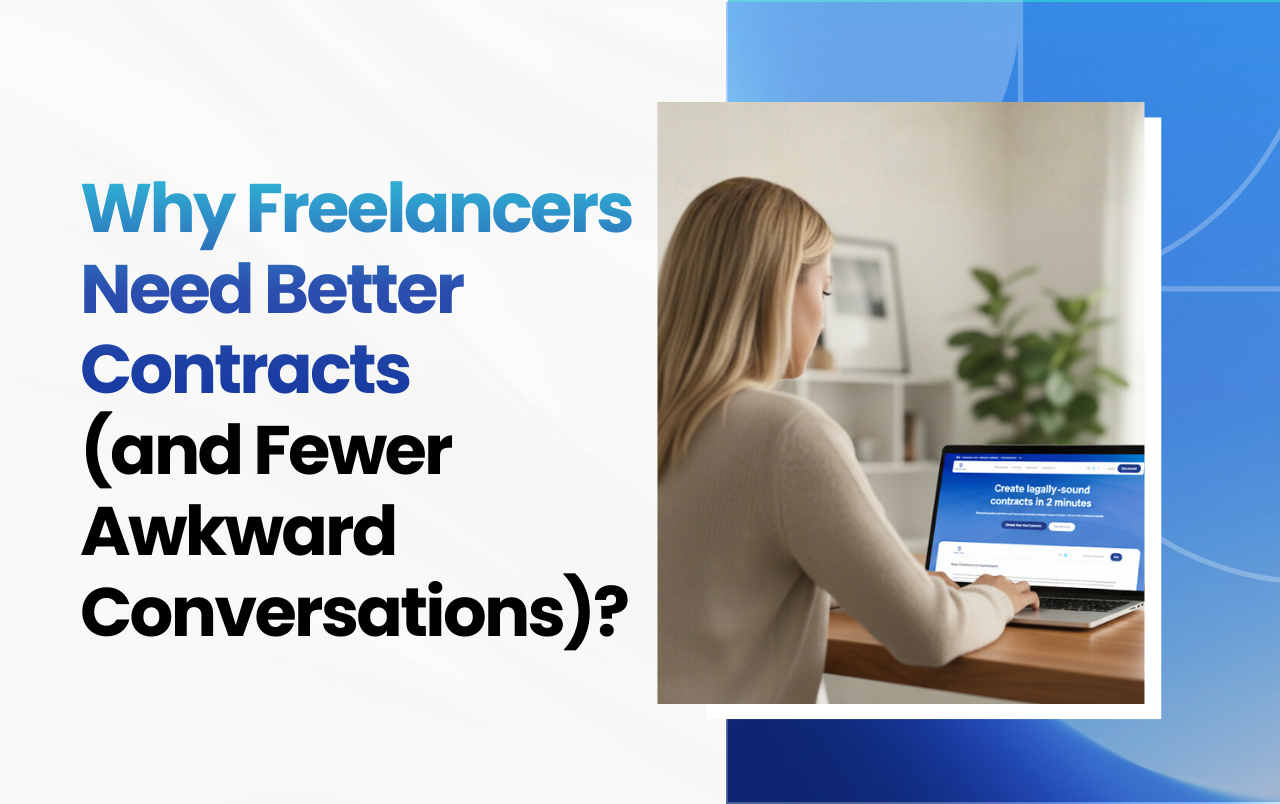
Instead of forcing you to interpret legal jargon, platforms like SnapLegal guide you through the process using plain language questions.
You answer simple prompts. The contract adapts to your situation. You see a legal draft alongside a plain-English summary so you know exactly what you are agreeing to.
That clarity is priceless for freelancers.
Contracts Actually Make Client Relationships Better
This part surprises a lot of people.
Clients often feel more comfortable when there is a clear contract.
Why?
Because it shows professionalism.
Because it removes uncertainty.
Because everyone knows the rules.
A well-written contract sets the tone for the entire working relationship. It signals that you take your work seriously and that you respect both your time and theirs.
Instead of awkward check-ins, you get smoother projects and fewer surprises.
Digital Contracts Save Freelancers Time and Sanity
Freelancers already wear too many hats. Legal admin should not be one of them.
Modern contract platforms combine drafting, reviewing and signing in one place. No printing. No scanning. No email chains with multiple versions.
With secure digital signing, contracts are finalized quickly and stored safely. You always know where your agreements are and who signed them.
This is especially helpful when you are juggling multiple clients or onboarding new ones frequently.
Why Plain English Matters More Than You Think
Signing a contract you do not fully understand creates anxiety. Even if nothing goes wrong, that feeling lingers.
Plain-English summaries change that experience.
When you understand your contract, you feel confident enforcing it. You feel comfortable referring back to it. You feel protected instead of exposed.
For freelancers, that confidence is a big deal. It allows you to focus on your work instead of worrying about what might go wrong.
The Freelancer Mindset Shift
The biggest change freelancers can make is treating contracts as tools, not obstacles.
A contract is not a necessary evil. It is a communication tool. It sets expectations. It protects your time. It supports your business growth.
Once you start using clear, professional contracts consistently, you will notice fewer problems and stronger client relationships.
And you will have far fewer awkward conversations.
Ready to Upgrade Your Freelance Contracts?
If contracts still feel uncomfortable or confusing, that is a sign your tools need an upgrade.
You do not need to become a legal expert to protect yourself. You just need a smarter way to create agreements that make sense.
If you want help creating freelance contracts that are clear, fair and easy to use, talk to the SnapLegal team.
Reach out here: https://snaplegal.ai/contactus