Contract templates are everywhere.
You can find them with a quick search, download them for free and start editing in minutes. On the surface, they seem like an easy win.
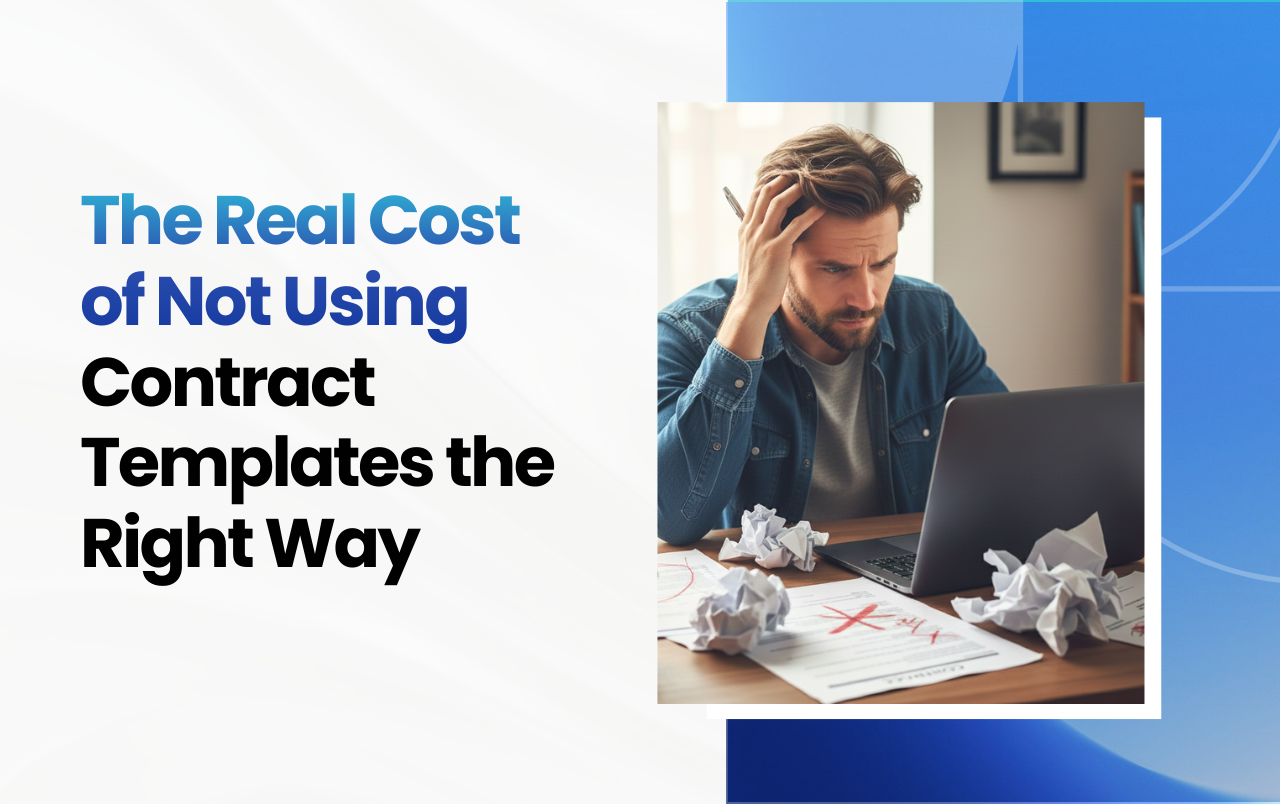
But here is the uncomfortable truth. Using contract templates the wrong way often costs more than not using them at all.
Those costs rarely show up immediately. They appear later as confusion, disputes, unpaid work, or broken relationships.
Let’s talk about what really happens when templates are misused and how to avoid those mistakes.
Templates Are Tools, Not Solutions
A contract template is a starting point, not a finished product.
The biggest mistake people make is treating templates like plug-and-play legal protection. They change the names, dates and payment amount and assume the rest will magically apply to their situation.
It usually does not.
Templates are written to be generic. Your business is not.
When templates are used without customization or understanding, they create a false sense of security. You think you are protected, but critical details are either missing or misunderstood.
The Hidden Cost of Misaligned Terms
One of the most common problems with generic contract templates is misalignment.
The contract says one thing. The working relationship does another.
For example:
- The template assumes a fixed project, but the work is ongoing
- The payment section does not match how invoices are actually handled
- The termination clause conflicts with what both parties expect
When issues arise, the contract does not reflect reality. That is when problems start.
Misaligned terms often lead to arguments that could have been avoided with clearer agreements.
Confusion Is Expensive
When people do not understand their contracts, they hesitate to enforce them.
They second-guess themselves.
They avoid difficult conversations.
They accept outcomes they should not.
This is especially common with freelancers and small business owners who use templates filled with legal language they do not fully understand.
If you cannot confidently explain what your contract says, it is not doing its job.
Clarity is not optional. It is essential.
Disputes Cost Time, Money and Energy
Most disputes are not about bad intentions. They are about unclear expectations.
When a contract template is vague or poorly adapted, both sides interpret it differently. Each person believes they are right.
Resolving these disputes takes time. Sometimes it takes money. Always it takes energy.
Even small disagreements can derail projects, damage reputations and drain focus from your actual work.
All of that comes from a document that was supposed to prevent problems.
Templates Without Context Are Risky
A contract template does not know your context.
It does not know:
- Where you operate
- How you work with clients
- What risks matter most to you
- What outcomes you are trying to avoid
Without context, templates include clauses that may be unnecessary or exclude ones that are critical.
This is why guided contract tools are so effective. They add context through questions and explanations instead of forcing you to guess.
Platforms like SnapLegal help users apply templates correctly by adapting them to real situations and explaining what each section does.
That context turns templates into useful agreements instead of legal clutter.
One Template Does Not Fit Every Situation
Many people reuse the same template for everything.
Client agreements.
Consulting work.
Contractors.
Partnerships.
Each of these relationships has different risks and expectations. Using the same document across all of them is a recipe for trouble.
Even small changes in scope or responsibility can require different contract language.
The cost of using the wrong template is not obvious until something goes wrong. By then, it is too late to fix.
The Illusion of Saving Money
Free templates feel like a cost-saving choice.
In reality, they often create hidden costs:
- Unpaid work
- Delayed payments
- Disputes
- Legal consultations after problems arise
Spending a little more time or using better tools upfront almost always saves money later.
Good contracts are not about spending less. They are about losing less.
How to Use Contract Templates the Right Way
Templates can be incredibly useful when used correctly.
Here is what that looks like.
You understand what each section means
You customize terms to match reality
You remove clauses that do not apply
You add clarity where needed
You review the final agreement before signing
Better yet, you use a system that guides you through this process instead of leaving you alone with a wall of text.
That guidance is what turns templates into protection.
Confidence Comes From Understanding
The most valuable thing a contract can give you is confidence.
Confidence to set boundaries.
Confidence to enforce terms.
Confidence to move forward without hesitation.
If your contract template does not give you that confidence, it is not enough.
Understanding your agreement matters more than how long or formal it looks.
Are Your Templates Helping or Hurting You?
If you are relying on templates and hoping they work, it may be time to rethink your approach.
Contracts should reduce stress, not create it. They should clarify relationships, not complicate them.
If you want help using contract templates the right way or switching to a smarter system, the SnapLegal team can help.
Reach out here: https://snaplegal.ai/contactus