If you have ever signed a contract online and paused for half a second thinking, “Is this actually valid?” you are not alone.
Electronic signatures feel almost too easy. Click, type your name, submit. No pen. No paper. No dramatic signing moment.
So the question comes up again and again.
Are digital contracts really legally binding?
Short answer: yes.
Long answer: let’s explain why, without legal jargon.
What an E-Signature Actually Is
An electronic signature is any digital method that shows your intent to agree to a document.
That intent is the key part.
Typing your name
Clicking “I agree”
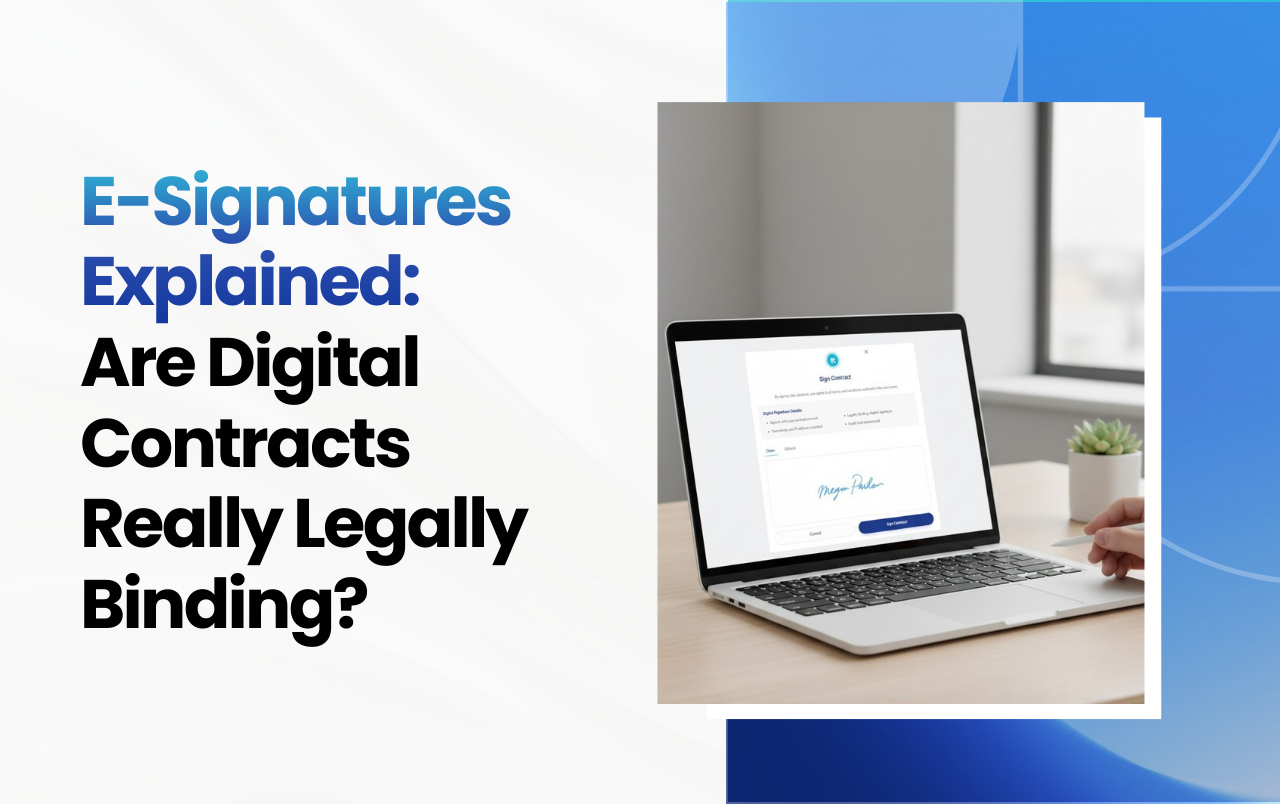
Drawing your signature with a mouse or finger
Using a secure e-signature platform
All of these can qualify as valid electronic signatures when done correctly.
The law does not care about ink. It cares about consent.
Why Digital Signatures Are Legally Recognized
In many countries, including the United States, electronic signatures are legally recognized under laws like the ESIGN Act and UETA.
These laws exist for one simple reason.
Business moved online.
Requiring physical signatures for everything would slow commerce to a crawl. Lawmakers adapted to reality by recognizing that digital intent is just as valid as ink on paper.
As long as certain conditions are met, an electronic signature carries the same legal weight as a handwritten one.
What Makes an E-Signature Legally Binding
For a digital contract to be enforceable, a few things must be true.
Clear Intent
The signer must clearly intend to sign the agreement. Clicking through without context or understanding can weaken this.
Consent to Do Business Electronically
Both parties must agree to use electronic signatures. Most platforms include this automatically.
Identity Verification
The system should be able to show who signed the document. This can include email verification, audit trails, or authentication steps.
Record Integrity
The signed document must be protected from changes after signing. Secure platforms lock the document and record timestamps.
When these elements are present, electronic signatures are not just valid. They are strong evidence.
Why Digital Signatures Are Often Safer Than Paper
This surprises a lot of people.
A paper contract can be lost, altered, or disputed more easily than a digital one.
Digital contracts often include:
- Time and date stamps
- IP address records
- Signature logs
- Document version tracking
This creates a clear audit trail.
If there is ever a dispute, a digital contract can show exactly when it was signed, by whom and in what form. That level of detail is hard to match with paper.
Common Myths About E-Signatures
Let’s clear up a few misconceptions.
Myth: Digital signatures are only valid for small agreements
False. Many large, complex contracts are signed electronically every day.
Myth: You need a notary for digital contracts
Not usually. Most contracts do not require notarization, whether signed digitally or on paper.
Myth: Typed names are not real signatures
They are, as long as intent and consent are clear.
Myth: Courts do not accept electronic contracts
They do, regularly.
The law has caught up with how people actually do business.
When Digital Signing Makes the Biggest Difference
E-signatures shine in situations where speed and convenience matter.
Freelancers onboarding clients
Businesses hiring contractors
Startups closing deals remotely
Teams working across time zones
Instead of waiting days for signatures, agreements can be finalized in minutes.
That speed reduces friction and keeps projects moving.
Why the Platform You Use Matters
Not all e-signature tools are created equal.
A secure digital contract platform does more than collect a signature. It protects the entire agreement.
Platforms like SnapLegal combine contract drafting, plain-English explanations and secure signing in one workflow.
This ensures:
- The signer understands the agreement
- The document is properly structured
- The signature is recorded securely
- The final contract is stored safely
Using a reputable platform matters because it strengthens enforceability and reduces risk.
Understanding Before Signing Is Still Essential
A legally binding contract is only helpful if you understand it.
E-signatures make signing easier, but they do not replace the need for clarity.
This is where modern platforms stand out. By showing a plain-English summary alongside the legal text, they help users understand what they are agreeing to before signing.
Confidence comes from clarity, not speed alone.
Digital Contracts Are Here to Stay
Electronic signatures are not a trend or a shortcut. They are the standard way business is done today.
Remote work, global clients and fast-moving deals all depend on digital agreements.
Once you understand how e-signatures work and why they are legally binding, the hesitation disappears. Signing online becomes just another normal business step.
Still Unsure About Digital Signing?
If you are hesitant about using electronic signatures or want to make sure your contracts are set up the right way, it is worth asking questions before guessing.
Getting clarity now can save stress later.
If you want help understanding digital contracts or setting up secure e-signatures for your agreements, the SnapLegal team can help.
Reach out here: https://snaplegal.ai/contactus