For a long time, creating a legally binding contract felt out of reach unless you hired a lawyer. Contracts were treated like mysterious documents that required formal meetings, billable hours and a lot of back and forth.
That world no longer exists.
Today, freelancers, entrepreneurs and small business owners create legally binding contracts online every day without speaking to a lawyer at all. They do it confidently, quickly and correctly. The key is understanding what actually makes a contract valid and using tools that guide you instead of overwhelming you.
Once you understand the basics, contracts stop feeling intimidating and start feeling useful.
What “Legally Binding” Actually Means
A legally binding contract does not need fancy language or complex formatting. Courts do not care how official a document looks. They care about intent, clarity and agreement.
At its core, a contract becomes legally binding when one party makes an offer, the other party accepts it, both sides exchange something of value and everyone clearly intends for the agreement to be enforceable. That is it. Those principles apply whether the contract is written on paper, typed in a document, or created entirely online.
This is why online contracts work. The medium does not matter. The structure and intent do.
Why Most People Do Not Need a Lawyer for Everyday Contracts
Lawyers play a critical role in complex, high-risk, or highly regulated agreements. But most everyday business contracts are not unique legal puzzles. They follow well-established patterns that have existed for decades.
Freelance agreements, consulting contracts, independent contractor agreements, service agreements and NDAs all rely on standard legal frameworks. The challenge for most people is not inventing new language. It is applying the right structure to their specific situation.
Modern contract platforms solve this by asking the right questions up front. Instead of drafting from scratch, you describe the relationship, the work and the expectations in plain language. The system translates that information into legally structured terms.
That guidance removes the need for constant legal involvement in routine agreements.
How Online Contract Creation Actually Works
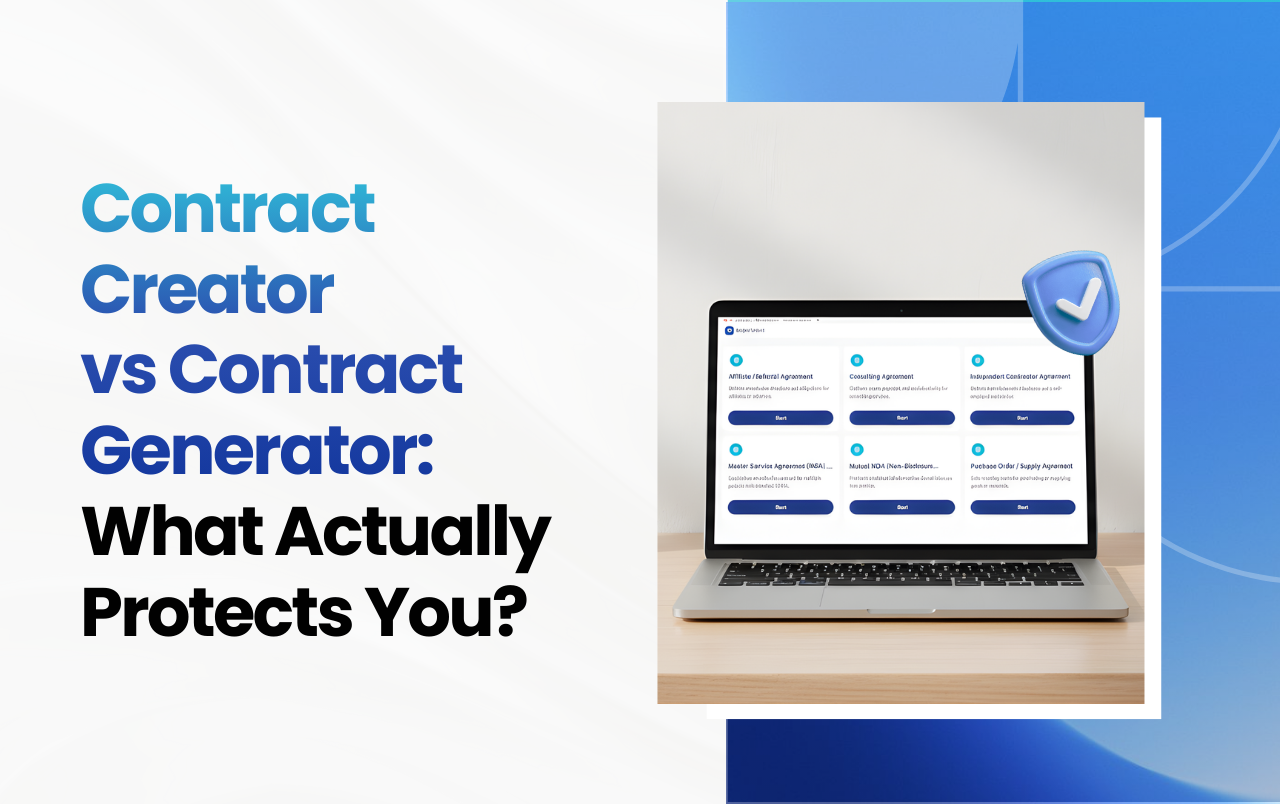
Creating a contract online is far more straightforward than people expect. You start by choosing the type of agreement that matches your situation. From there, you are guided through a series of questions that reflect real-world decisions, not legal theory.
You are asked how the work will be done, how payment works, who owns the results and what happens if things end early. As you answer, the contract is built in the background. You are not guessing which clauses to include or how to word them.
When the draft is ready, you review it before signing. Good platforms show both the legal language and a plain-English explanation so you understand exactly what the contract does.
This process mirrors how lawyers think about contracts, but it removes the friction and cost.
Why Understanding the Contract Matters More Than Anything Else
One of the biggest mistakes people make is focusing on whether a contract looks official instead of whether they understand it.
A contract only protects you if you know what it says. If you cannot confidently explain your agreement to the other party, you are relying on luck rather than clarity.
This is where modern tools make a real difference. Platforms like SnapLegal emphasize understanding by pairing legal text with plain-English summaries. You are not just signing a document. You are learning what you are agreeing to.
That understanding is what gives contracts their real power. It allows you to enforce terms, set boundaries and avoid misunderstandings before they happen.
Electronic Signatures Make Contracts Official
Another common concern is whether contracts signed online are truly valid. They are.
Electronic signatures are legally recognized in many jurisdictions and are widely accepted in business. What matters is that the signature shows clear intent to agree and that the document cannot be altered after signing.
Secure digital signing platforms create a record of who signed, when they signed and what version of the document was agreed to. In many cases, this creates stronger evidence than a traditional paper contract that could be lost or disputed.
Signing online is not a shortcut. It is the modern standard.
Where People Still Go Wrong
While creating contracts online is easier than ever, problems still happen when people rush or guess.
Some people choose the wrong type of agreement for their relationship. Others leave important terms vague because they feel uncomfortable being specific. Some sign without reading because they assume everything is standard.
These mistakes are not caused by online contracts themselves. They are caused by lack of clarity.
The solution is not complexity. It is guidance. When the contract creation process explains what each decision means, people make better choices.
Confidence Is the Real Benefit of Online Contracts
The biggest advantage of creating contracts online without a lawyer is not speed or cost. It is confidence.
Confidence that both sides understand the agreement.
Confidence that expectations are clear.
Confidence that you are protected if something goes wrong.
When contracts are accessible and understandable, people actually use them consistently. That consistency prevents disputes and strengthens professional relationships.
Contracts stop being something you avoid and become something you rely on.
Creating Contracts Online Is the New Normal
The way people work has changed. Contracts have changed with it.
Remote work, freelance economies and digital businesses all depend on fast, clear agreements. Online contract creation is not a workaround. It is how modern business operates.
You do not need to be a lawyer to create a legally binding contract. You just need the right structure, the right guidance and the confidence that comes from understanding what you sign.
Want Help Creating Your Next Contract?
If you want to create a legally binding contract online but are unsure where to start, it is better to ask questions than make assumptions.
The SnapLegal team helps individuals and businesses create clear, enforceable agreements without unnecessary complexity.
Get in touch here: https://snaplegal.ai/contactus