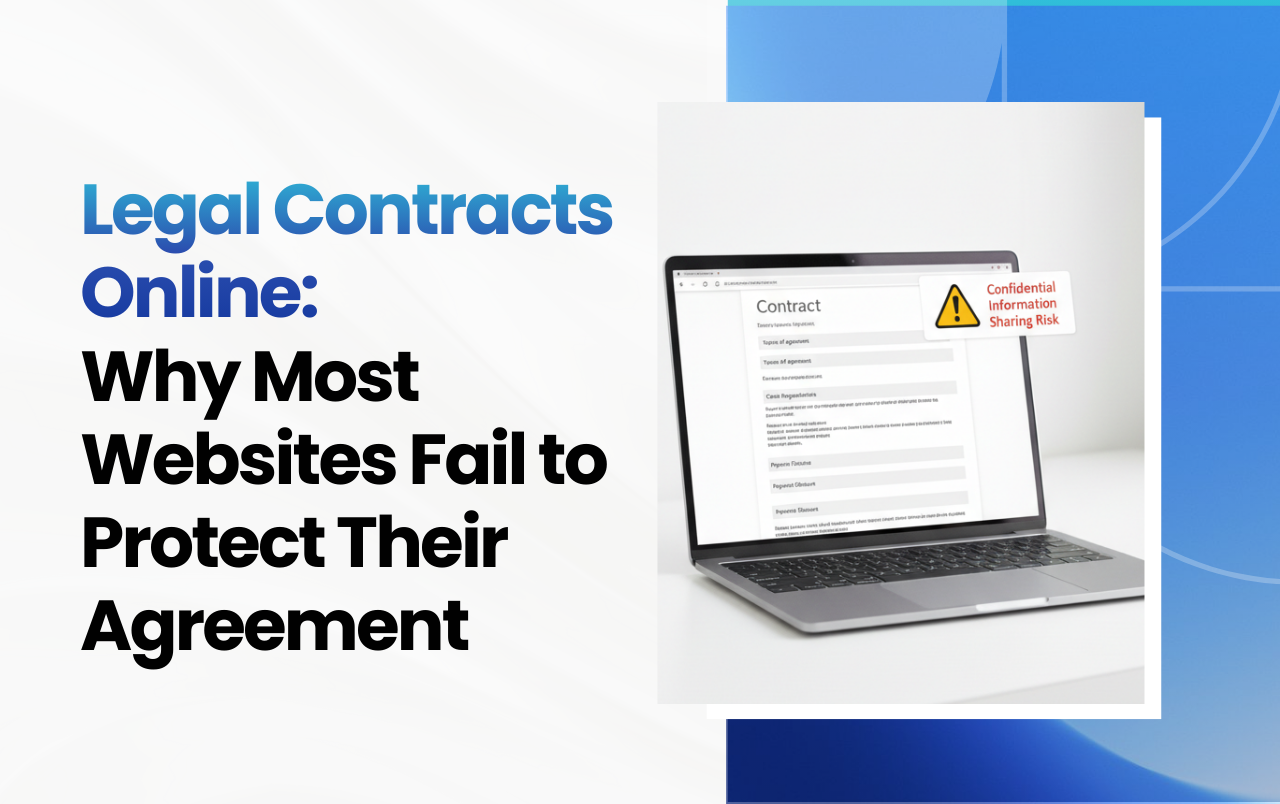
Online legal contracts are now the default starting point for freelancers, contractors, and individuals who need agreements fast. You search. You click. You download. In under ten minutes, you have a document that looks official.
It feels productive. It feels responsible.However, this is where most platforms quietly fail.
The problem is not access. It’s understanding. Most websites offering online legal contracts assume users already know what they need, how contracts work, and which choices matter.
That assumption turns convenience into risk.
This article explains why most platforms fall short, the hidden gaps inside popular tools, and what actually helps people create agreements that work in real life.
Speed Became the Selling Point. Guidance Got Lost
Most platforms sell one thing above all else. Speed.
Instant downloads. Ready-to-use files. One-click agreements.
Speed is useful. But contracts are not groceries. Faster is not always better.
When platforms focus only on speed, they skip the most important part of document creation. Helping users understand what they are agreeing to and why it matters.
Without that, speed creates false confidence.
The Comfort of Familiar Templates
Templates feel safe. They look official. They use formal language. They follow a structure people recognize.
That’s why legal document templates are everywhere.
The issue is not the template itself. It’s how little context users get while filling it out.
Most platforms don’t explain:
- What each section actually does
- Which clauses are critical and which are situational
- How small changes affect the overall agreement
Users fill in names and dates and assume the rest works automatically.
It doesn’t.
Contract Generator Mistakes Hide in Plain Sight
Many contract generator mistakes don’t look like mistakes at all. The document downloads successfully. The formatting looks clean. Nothing crashes.
The problems show up later.
Common examples include:
- Vague scope descriptions
- Conflicting timelines
- Payment terms that don’t match expectations
- Missing details users didn’t realize were important
Most generators never flag these issues. They assume silence means certainty.
That’s a design choice. And it fails users.
When AI Makes Things Sound Better Than They Are
The rise of the AI contract generator added polish to the problem.
AI tools can write fluent, confident language. They can rephrase clauses and smooth transitions.
What they often don’t do is explain decisions.
Users get professional-sounding text without understanding:
- Why a clause exists
- What it commits them to
- Whether it fits their situation
Clear writing is not the same as clear thinking. AI helps with the former. Guidance is required for the latter.
Digital Platforms Focus on Files, Not People
A digital contract platform should do more than host documents. It should help users think through choices.
Most don’t.
They focus on:
- File formats
- Branding
- Download speed
They rarely focus on:
- Decision-making
- Context
- Understanding
Contracts are written for humans. Yet most platforms treat users like data entry points.
Drafting Is More Than Filling in Blanks
A true contract drafting tool should guide structure, not just collect inputs.
Drafting involves:
- Defining expectations
- Clarifying responsibilities
- Anticipating common misunderstandings
Tools that only ask for surface-level information miss this entirely. They produce documents that look complete but don’t reflect reality.
That’s how agreements fail quietly.
Why “Professional” Doesn’t Always Mean Useful
Many platforms promise “professional” documents. What they usually mean is formal language and clean formatting.
Professional does not always mean understandable.
Documents filled with dense language may look impressive but confuse the people using them. Confusion leads to assumptions. Assumptions lead to disputes.
Clarity is not a bonus feature. That’s the point.
What Actually Protects an Agreement
Protection does not come from length. Or tone. Or complex wording.
It comes from clarity.
Agreements work when:
- Terms are specific
- Roles are clearly defined
- Expectations are visible to everyone involved
That requires guidance during creation. Not after.
Why Most Websites Avoid Giving Guidance
Guidance slows things down.
It requires explanations. Thoughtful prompts. Plain-English summaries.
Most platforms avoid it because it complicates the product. It adds steps. It challenges users instead of rushing them to a download.
But skipping guidance doesn’t remove complexity. It just pushes it onto the user.
How SnapLegal Takes a Different Approach
SnapLegal was built around a simple principle. People should understand what they’re creating while they’re creating it.
Instead of dropping users into static templates, SnapLegal offers guided, self-serve document creation. Each step explains what’s happening and why it matters.
No jargon. No assumptions.
You see the document take shape as you answer questions. You understand each section before moving on.
And you don’t need an account to start.
Built for Freelancers, Contractors, and Individuals
Most contract platforms are built for volume. SnapLegal is built for people.
Freelancers and individuals don’t create documents every day. They shouldn’t be expected to understand contract structure on their own.
SnapLegal focuses on:
- Plain-English summaries
- Logical flow
- Fast, simple document creation
You create professional legal documents in minutes. Without confusion.
Why Plain Language Changes Everything
Plain language does not simplify meaning. It clarifies it.
When users understand what a section does, they make better choices. They catch issues early. They finish with confidence instead of hope.
That’s the difference between a document that exists and one that works.
Learning from Public Information Sources
Public agencies often emphasize clarity and transparency in written agreements. For example, the Federal Trade Commission explains why clear terms and understandable language matter for agreements and consumer understanding.
These resources educate. They don’t generate documents.
Guided platforms bridge that gap by turning understanding into action.
The Real Cost of “Good Enough” Contracts
Most people don’t realize a document failed until it matters.
When expectations clash. When terms are unclear. When assumptions surface.
By then, it’s too late to fix the document.
That’s why the creation process matters more than the download button.
Create Online Legal Contracts Without Guesswork
Most platforms assume users know what they’re doing. SnapLegal doesn’t.
It guides you through the process. Explains each step. Shows you the document as it forms.
No sign-up. No pressure. No legal jargon.
Create professional legal documents in minutes. See the value first. Commit later. Start with SnapLegal today!