What Is a Digital Contract Platform?
A digital contract platform is software that helps you create, manage, and store agreements online.
It replaces manual paperwork with:
- Online creation tools
- Automated workflows
- Digital storage
- E-signature integration
These systems are often part of larger SaaS legal platforms designed to streamline business operations.
Used correctly, they save time.
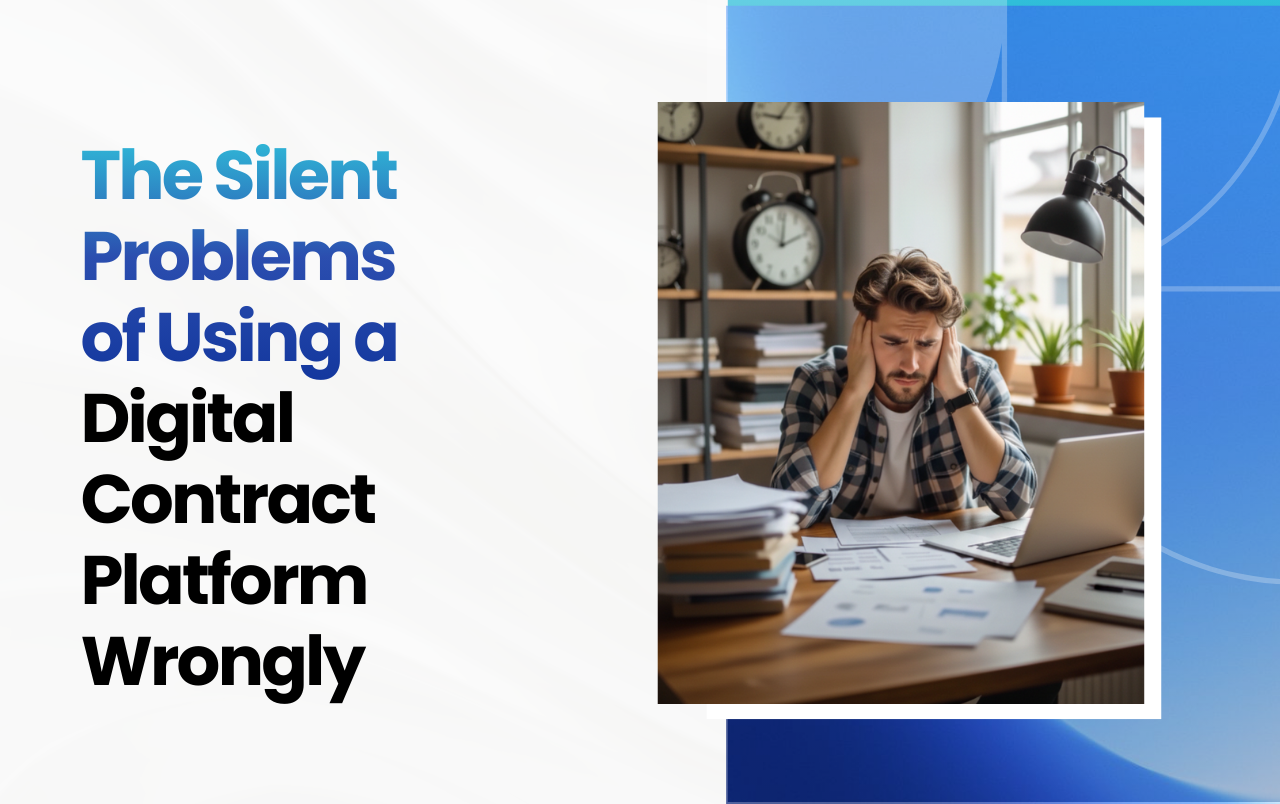
Used carelessly, they create silent problems that build over time.
Why Do Businesses Rely on Digital Contract Platforms?
They centralize documents and reduce manual work.
Businesses use digital agreement tools to:
- Create contracts faster
- Track versions
- Manage approvals
- Store everything in one place
For growing teams, online contract management feels like a major upgrade from scattered PDFs and email threads. However, technology does not automatically fix structural issues.
What Happens When a Digital Contract Platform Is Used Wrongly?
Small mistakes scale quietly.
Common misuse includes:
- Uploading outdated templates
- Automating unclear documents
- Skipping review steps
- Copying old contracts without updates
These errors don’t break the system. They repeat inside it.
At SnapLegal, we often see users move to digital systems thinking automation will fix clarity problems. It doesn’t. It multiplies them.
What Are the Most Common Contract Platform Issues?
It is surprising to notice that the biggest issues come from poor setup, not bad software.
Typical contract platform issues include:
- Inconsistent document versions
- Vague templates reused across teams
- Unclear approval processes
- Poor naming or organization
The platform works. The structure doesn’t.
Digital tools amplify whatever foundation you give them.
Why Does Automation Make Problems Worse?
Automation makes the problems worse but it repeats mistakes perfectly.
Contract automation software is designed to scale. It replicates documents quickly and efficiently.
If your base document has:
- Vague scope
- Missing responsibilities
- Confusing clauses
Automation spreads those weaknesses across every agreement.
One unclear template becomes fifty unclear contracts.
That’s the silent risk.
Can Online Contract Management Reduce Risk?
Having to manage your contracts online can reduce the risk, but only with clear processes.
Online contract management helps when:
- Templates are well-structured
- Version control is consistent
- Teams understand document intent
Without those basics, management tools only organize confusion.
Structure must come before software.
How Do Digital Agreement Tools Fail Small Teams?
By creating a false sense of control.
Digital agreement tools make everything look organized:
- Clean dashboards
- Status updates
- Automated reminders
Nonetheless, organization does not equal clarity.
If teams don’t fully understand the documents they’re sending, tools won’t fix that gap.
Good software improves efficiency.
It doesn’t replace thoughtful creation.
What Are the Risks of SaaS Legal Platforms?
The biggest risk is over-reliance.
Many SaaS legal platforms promise:
- Faster execution
- Centralized systems
- Reduced administrative burden
All true.
However, they can encourage:
- Blind trust in templates
- Reduced manual review
- Overconfidence in automation
The problem isn’t the platform. It’s skipping fundamentals.
How Do Silent Problems Show Up Over Time?
Through friction, not failure.
You’ll notice:
- More internal clarifications
- Increased revision cycles
- Confusion over document versions
- Repeated questions from clients
Nothing dramatic happens. Things just feel slower.
That’s how silent contract problems grow.
What Basics Should Never Be Skipped?
The top three basics that should never be skipped are; clarity, review, and alignment.
Before using a digital contract platform at scale:
1. Review your base templates
- Are responsibilities clear?
- Is the scope specific?
- Does the structure match your workflow?
2. Standardize naming and version control
- Clear file naming
- Defined update processes
3. Train your team
- Make sure everyone understands document intent
- Avoid “just send it” culture
Technology works best with discipline.
How Does SnapLegal Approach Digital Contract Creation?
We, at SnapLegal, are dedicated to only focusing on clarity before automation.
SnapLegal is built as a guided, self-serve document creation platform. Instead of overwhelming users with raw templates, it explains sections in plain English while the document is being built.
This helps prevent:
- Vague language
- Misaligned expectations
- Poor structural decisions
You’re not just uploading documents into a system.
You’re creating them with guidance first.
No legal jargon. No forced sign-up. You see the value before committing.
Why Clarity Matters More Than Speed
Clarity beats speed, because speed without structure creates scale without stability.
A fast system built on unclear documents will:
- Multiply confusion
- Increase follow-ups
- Slow teams down long-term
Clear documents created thoughtfully allow automation to actually work.
At SnapLegal, we believe automation should support clarity, not replace it.
Public guidance consistently emphasizes clarity and transparency in written agreements. For example, the Federal Trade Commission highlights the importance of understandable terms so people know what they’re agreeing to.
Digital platforms should support that clarity, not hide it behind dashboards.
Should You Avoid Digital Contract Platforms?
Avoiding digital contract platforms is your own decision but the answer overall is no. Instead, one should use them correctly.
Digital contract platforms are powerful when:
- Templates are strong
- Teams understand the structure
- Automation follows clarity
Used blindly, they scale mistakes.
Used thoughtfully, they scale efficiency.
Quick Checklist Before Scaling Your Platform
Before expanding use of your contract automation software, ask:
- Do we understand every clause in our templates?
- Have we removed vague language?
- Are responsibilities clearly defined?
- Do we have version control standards?
- Has the team reviewed the document flow?
If the answer is no to any of these, fix that first.
Final Summary: Technology Amplifies What You Build
A digital contract platform is a multiplier.
If your foundation is clear, it multiplies efficiency.
If your foundation is weak, it multiplies confusion.
SnapLegal helps you build strong documents first. Guided, self-serve creation. Plain-English summaries. Fast and simple.
No legal jargon.
No appointments.
No sign-up required.
See the value first. Commit later.
Start with SnapLegal today!
Frequently Asked Questions
What is the biggest risk of a digital contract platform?
Repeating unclear or outdated templates at scale.
Does contract automation software reduce errors?
Only if the base document is clear and well-structured.
Are SaaS legal platforms reliable?
Yes, when used with strong internal processes.
Why do contract platform issues go unnoticed?
For they create friction, not immediate failure.
Do I need to sign up to try SnapLegal?
No. You can start creating documents instantly.