What Are Legal Document Templates?
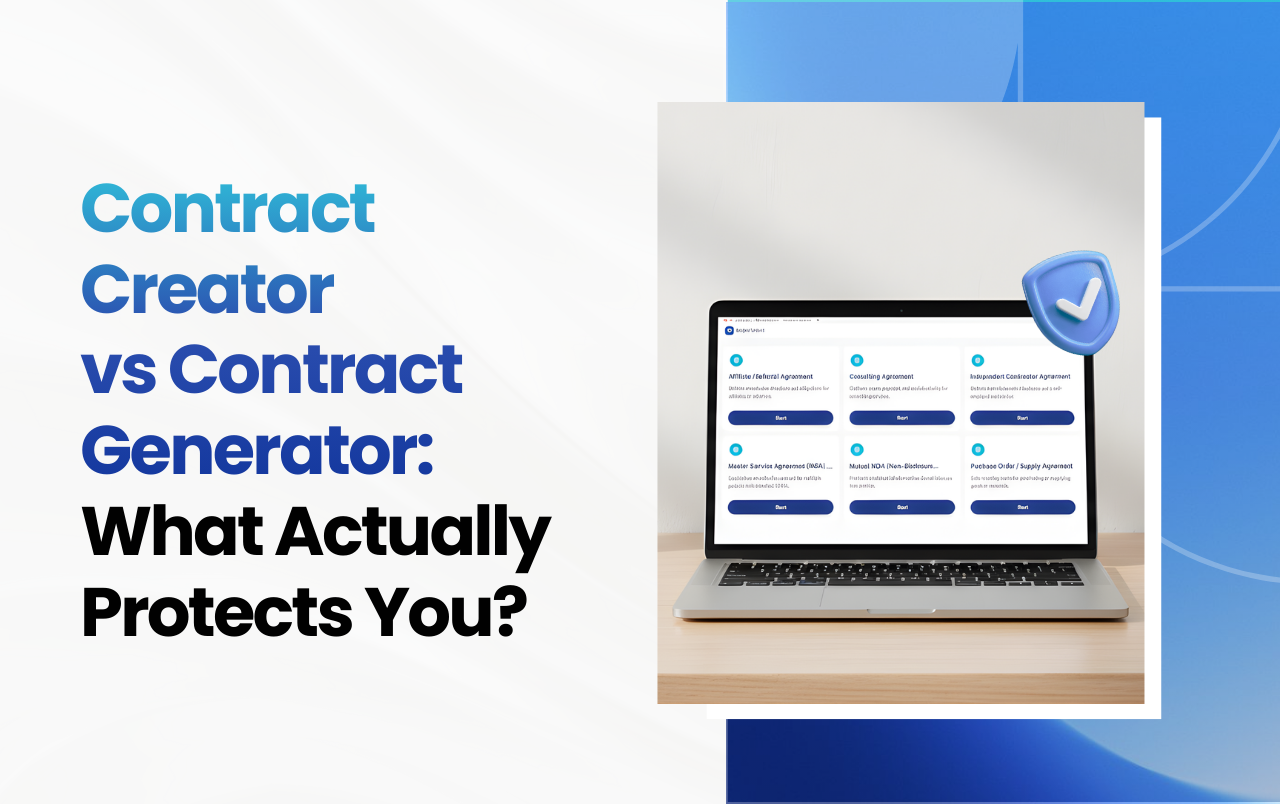
Legal document templates are pre-written agreement formats that allow users to create contracts by filling in key details.
They usually include:
- Standard clauses
- Placeholder fields
- A ready-made structure
Templates help people start quickly instead of writing documents from scratch.
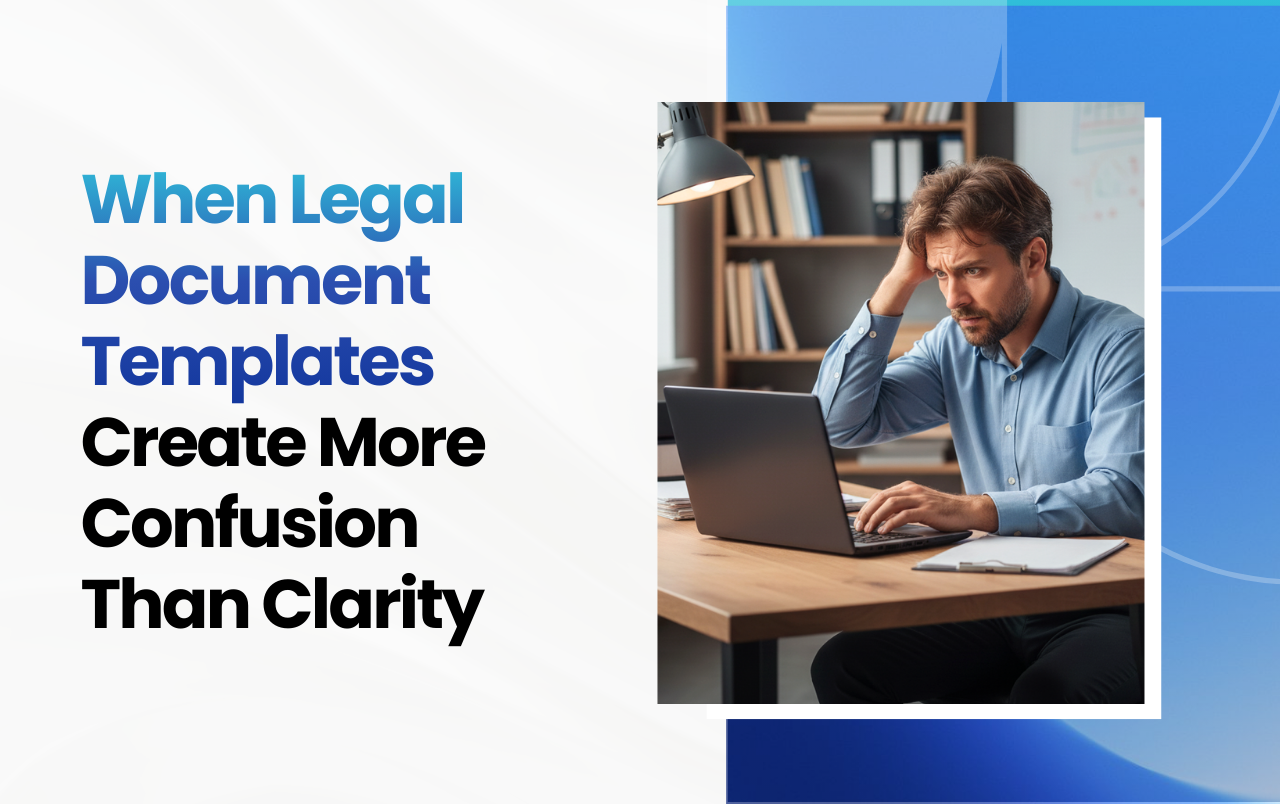
However, templates are only starting points. Without careful customization, they can create confusion instead of clarity which is ultimately the issue.
Why Do People Use Legal Document Templates So Often?
The use of legal documents has been on the rise because they save time and reduce the effort of starting from scratch.
Templates are popular because they:
- Provide a structured format
- Include common clauses
- Look professional
Freelancers, contractors, and small businesses often rely on them to move quickly.
However, speed can hide important details that need attention.
When Do Legal Document Templates Create Confusion?
When users assume the template already fits their situation.
Templates are written for general scenarios.
Your agreement is rarely general.
Confusion appears when:
- The scope is not clearly defined
- Responsibilities are loosely described
- Payment terms are vague
The document may look complete, but important expectations remain unclear.
At SnapLegal, we often see users discover that a template sounded correct but never clearly defined their actual project.
Why Do Contract Templates Sometimes Make Things Worse?
These templates sometimes make things worse because they mix general language with specific situations.
Many contract templates contain flexible wording like:
- “As agreed between parties”
- “Reasonable timeframe”
- “Standard services”
These phrases keep templates broadly usable. Moreover, they also create interpretation gaps.
When disagreements arise, vague language causes confusion about what was actually agreed.
Do Legal Contracts Online Solve the Problem?
Well not automatically.
Legal contracts online make documents easier to access and generate.
They can:
- Speed up creation
- Provide reusable structures
- Allow quick edits
In addition, if the template itself is unclear, the online platform simply reproduces that confusion digitally.
Convenience does not replace clarity.
Can a Contract Generator Prevent Template Mistakes?
It helps with structure, but not with understanding.
A contract generator organizes documents and fills in clauses automatically.
This improves:
- Formatting
- Consistency
- Speed
Consequently, generators rely on the information users provide.
If the input is vague or incomplete, the generated document will still contain unclear language.
Automation repeats what it receives.
Why Digital Contract Platforms Don’t Always Fix Template Issues
These digital contract platforms don’t always fix the issues because they focus on workflow, not content clarity.
A digital contract platform helps manage documents by:
- Storing agreements
- Tracking versions
- Organizing workflows
These features are valuable.
However, the platform does not rewrite unclear clauses or clarify vague sections.
Technology organizes documents.
It doesn’t automatically improve them.
Do AI Contract Generators Make Templates Clearer?
They can improve wording but not context.
An AI contract generator can:
- Suggest clauses
- Structure agreements quickly
- Generate professional-sounding text
AI tools rely on patterns.
If the situation you describe is incomplete or unclear, AI will fill the gaps with general phrasing.
That phrasing may sound precise while still missing critical details.
What Are the Signs a Template Is Causing Confusion?
Look for sections that feel vague or difficult to interpret.
Common warning signs include:
- Broad service descriptions
- Undefined deliverables
- Flexible timelines
- Missing payment details
- Clauses you skipped reviewing
If you had questions while filling out the template, those questions may appear later for the other party.
How Can You Make Legal Document Templates Clearer?
In order to make your templates clearer, you can focus on specificity.
Use this checklist:
1. Define scope clearly
Explain exactly what work will be done.
2. Set precise timelines
Avoid vague deadlines.
3. Clarify responsibilities
Specify who does what.
4. Review every clause
Don’t leave sections unchanged without understanding them.
5. Avoid generic phrases
Replace flexible wording with specific terms.
Clarity improves reliability.
How Does SnapLegal Help Reduce Template Confusion?
By guiding users through document creation step by step.
SnapLegal is a guided, self-serve document creation platform designed to help users understand what they’re building.
Instead of static templates, SnapLegal:
- Explains each section in plain English
- Shows how inputs shape the document
- Encourages clear, specific responses
This approach helps prevent vague language and overlooked sections.
You create professional legal documents in minutes without confusion.
No legal jargon.
No appointments.
No forced sign-up.
You can explore the platform before committing.
Why Clear Agreements Matter More Than Complex Ones
Clear documents reduce misunderstandings.
Complicated language often hides uncertainty.
Clear language exposes expectations.
Public guidance also emphasizes this principle. For example, the Federal Trade Commission highlights the importance of transparent and understandable agreements.
Clarity allows everyone involved to know what they’re agreeing to.
Should You Stop Using Legal Document Templates?
No. You should use them thoughtfully.
Templates are helpful for:
- Structure
- Consistency
- Faster document creation
They become confusing when:
- They are copied without review
- Generic language remains unchanged
- Context is ignored
Used carefully, templates save time.
Used casually, they create uncertainty.
Key Takeaways
- Legal document templates provide structure but require customization
- Vague template language creates interpretation gaps
- Contract generators improve format, not clarity
- Digital platforms organize documents but don’t fix wording
- Specific language prevents confusion
Final Summary: Templates Should Clarify, Not Confuse
Legal document templates are useful tools.
However, when they’re copied or used without careful review, they can create more confusion than clarity.
SnapLegal helps you create professional legal documents in minutes through guided, self-serve creation designed for freelancers, contractors, and individuals.
No legal jargon.
No appointments.
No sign-up required.
See the value first. Commit later.
Start with SnapLegal today.
Frequently Asked Questions
Are legal document templates reliable?
Yes, when they are carefully customized and reviewed.
Why do templates sometimes cause confusion?
Because they contain general language that may not fit every situation.
Can AI contract generators remove template errors?
They can improve wording but still rely on the information you provide.
Do online legal contracts require editing?
Yes. Templates should always be reviewed and adjusted for each agreement.
Do I need to sign up to try SnapLegal?
No. You can start creating documents instantly.