What Are Contract Templates?
Contract templates are pre-written agreements you can reuse by filling in your own details.
They usually include:
- Standard clauses
- Basic structure
- Placeholder fields
They are designed to save time and provide consistency.
That’s useful. However, they don’t guarantee completeness.
Why Don’t Contract Templates Fully Protect You?
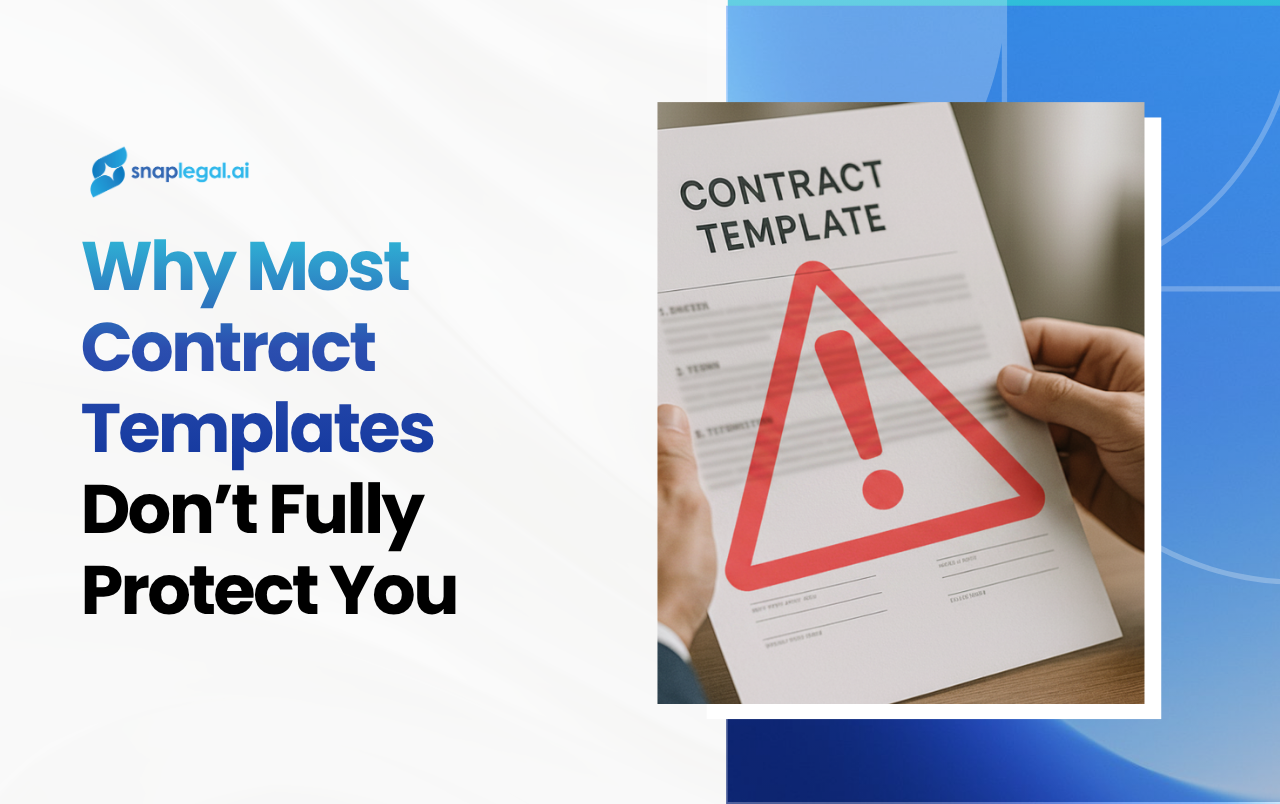
Contract templates don’t fully protect you because they are built for general use, not your specific situation.
Templates are designed to work across many scenarios.
That means they rely on broad wording and assumptions.
This creates a legal protection gap when:
- Your situation is more specific
- Important details are not included
- Clauses don’t match real expectations
A template gives structure.
It doesn’t guarantee accuracy.
What Are Generic Templates and Why Are They Risky?
Generic templates are one-size-fits-all documents that rarely fit perfectly.
Generic templates often:
- Use flexible language
- Avoid detailed specifics
- Cover common situations only
This makes them easy to reuse.
However, it also means:
- Important details may be missing
- Clauses may not reflect your needs
- Assumptions may go unchecked
The more generic the template, the greater the risk.
What Is the Legal Protection Gap?
It’s the gap between what the template says and what you actually need.
The legal protection gap appears when:
- The document looks complete
- But key details are unclear or missing
For example:
- Scope is not fully defined
- Payment terms lack precision
- Responsibilities are loosely described
These gaps are often invisible until a problem arises.
Are Unsafe Contract Forms Common?
Yes, especially when templates are reused without review.
Unsafe contract forms usually:
- Contain outdated clauses
- Include irrelevant sections
- Use vague or flexible wording
They may appear professional but lack clarity.
At SnapLegal, we often see users rely on templates that feel “good enough” but don’t fully reflect their actual agreement.
What Are the Main Template Limitations?
Templates cannot adapt automatically.
Key template limitations include:
- No understanding of your situation
- No ability to question unclear inputs
- No built-in guidance
- No automatic updates for changes
Templates stay static while your needs change.
That mismatch creates risk over time.
Why Do Templates Create False Confidence?
Templates create a false confidence because they look complete.
Templates often:
- Use formal formatting
- Include long clauses
- Appear detailed
This creates the impression of reliability.
Nevertheless, appearance is not accurate.
A document can look strong while still missing all the critical details.
When Do Contract Templates Fail Most?
When they are tested under pressure.
Templates usually work when:
- Everything goes smoothly
- Both parties agree informally
They fail when:
- A dispute arises
- Payment is delayed
- Scope changes unexpectedly
That’s when vague wording becomes a problem.
How Can You Make Contract Templates Safer?
By customizing them carefully.
Follow this checklist for secure contract drafting:
1. Define scope clearly
Explain exactly what is included.
2. Set precise timelines
Avoid vague deadlines.
3. Clarify responsibilities
Assign roles clearly.
4. Update all sections
Don’t leave clauses unchanged without review.
5. Replace generic language
Use specific, relevant terms.
Templates become safer when they are made specific.
Why Does Secure Contract Drafting Matter?
Secure contract drafting matters because clarity prevents misunderstandings.
Secure contract drafting ensures:
- Expectations are clear
- Responsibilities are defined
- Terms are easy to follow
Clear documents reduce confusion and repeated clarification.
How Does SnapLegal Reduce Template Risks?
By guiding users beyond static templates.
SnapLegal is a guided, self-serve document creation platform designed to eliminate the common gaps in templates.
Instead of relying on generic forms, SnapLegal:
- Explains each section in plain English
- Helps users provide specific inputs
- Builds documents step by step
This reduces vague wording and improves clarity from the start.
You create professional legal documents in minutes without confusion.
No legal jargon.
No appointments.
No sign-up required.
Why Clarity Is Better Than Complexity
Clarity is always a good option because simple, clear agreements work better in real situations.
Complex templates often:
- Hide unclear terms
- Require extra explanation
- Create confusion
Clear agreements:
- Improve communication
- Reduce disputes
- Save time
Should You Stop Using Contract Templates?
No. You should use them carefully.
Templates are useful for:
- Saving time
- Providing structure
- Maintaining consistency
They become risky when:
- Used without customization
- Trusted without review
- Treated as complete solutions
Used properly, they help.
Used blindly, they create gaps.
Key Takeaways
- Contract templates are useful but not complete solutions
- Generic templates create a legal protection gap
- Template limitations prevent automatic customization
- Unsafe forms often come from reused outdated content
- Secure drafting requires clarity and specificity
Final Summary: Templates Help, But They Don’t Complete the Job
Contract templates are a starting point.
Nevertheless, relying on them without customization creates gaps that appear later.
SnapLegal helps you create professional legal documents in minutes through guided, self-serve document creation designed for clarity and simplicity.
No legal jargon.
No appointments.
No sign-up required.
See the value first. Commit later.
Start with SnapLegal today!
Frequently Asked Questions
Do contract templates provide full protection?
No. They need customization to match your situation.
What is the biggest risk of generic templates?
They include broad language that may not fit specific agreements.
Can templates be made safer?
Yes, by reviewing and customizing every section carefully.
Why do templates fail during disputes?
Because vague terms become visible under pressure.
Do I need to sign up to try SnapLegal?
No. You can start creating documents instantly.